How to Protect Your Trees
A complete, honest management guide for Colorado homeowners. What to do, when to do it, what it costs, and what to avoid — all backed by university and Forest Service research.
Based on research from CSU Extension, Colorado State Forest Service, and the USDA Forest Service.
The most important thing to know: Once a tree is infested, no treatment can save it. Everything on this page is about prevention — protecting healthy trees before beetles attack. If you already see red needles, the priority shifts to removal to protect your remaining trees.
Keep Your Trees Healthy
A healthy pine tree's #1 defense is resin — thick, pressurized sap that physically pushes beetles out and poisons them. Drought-stressed trees can't produce enough. These are the things every homeowner can and should do, regardless of budget.
Deep Watering
The single most impactful thing a homeowner can do. A well-hydrated ponderosa produces thick, pressurized resin that physically ejects beetles. A drought-stressed tree is defenseless.
How much: 10 gallons per inch of trunk diameter (a 12" tree = 120 gallons)
How deep: Water must reach at least 12 inches below soil surface
Where: At the drip line (outer edge of canopy), NOT at the trunk
How often: 1-2 times/month year-round; weekly in peak summer drought
Method: Soaker hose at drip line, deep-root fork, or slow-running hose
Source: CSU Extension GardenNotes #657
Mulching
Supports your watering efforts by retaining moisture, moderating soil temperature, and reducing competition from grass and weeds.
How much: 4 inches of organic mulch around the base
Where: Out to 2-3 feet from trunk, but NOT touching the trunk
Bonus: Reduces weed competition for water your tree needs
Regular Inspections
Catching an infestation early is the difference between losing one tree and losing ten. A 10-minute monthly walk-around during beetle season can save you thousands of dollars and irreplaceable trees.
Monthly Walk-Around (DIY)
Walk each pine tree on your property once a month during beetle season. You don't need to be an expert — you just need to know the signs.
What to look for:
- Pitch tubes — popcorn-sized resin globs on the trunk (the tree fighting back)
- Boring dust — fine, reddish-brown sawdust in bark crevices or at the base
- Fading needles — green turning to yellow, then red (often starts at the top)
- Woodpecker activity — heavy flaking of bark means birds are feeding on larvae
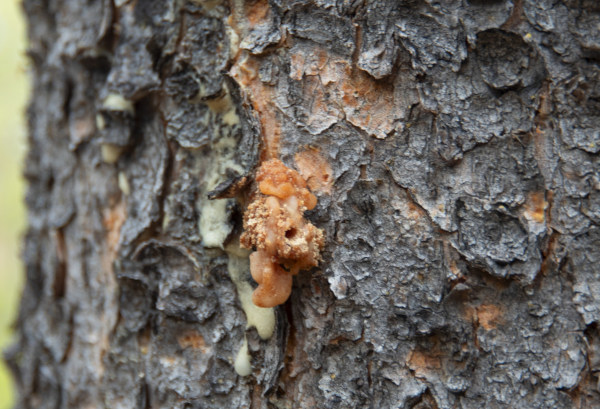
Pitch tubes: popcorn-sized resin globs where beetles tried to bore in. Photo: CSFS
See our warning signs guide for photos of each sign.
Professional Tree Assessment
A certified arborist can catch things you might miss — early beetle entry holes, stress indicators, root issues, and whether your trees are candidates for preventive spray. Many offer free or low-cost initial assessments.
When to call a pro:
- • You spot any of the warning signs above
- • A neighbor's tree has been infested
- • You have high-value pines you want to protect
- • You're unsure if your trees are healthy enough to resist
- • Before beetle season starts (ideally by May)
Look for ISA Certified Arborists or Colorado licensed pesticide applicators.
Seasonal Management Timeline
Winter (Dec–Feb)
Deep water during warm, dry spells. Mulch around trees. Plan spring treatments.
Spring (Mar–May)
Schedule preventive spray by June. Start monthly inspections. Water consistently.
Summer (Jun–Aug)
Peak beetle flight. Inspect every 2 weeks. Water weekly in drought. Do NOT prune pines.
Fall (Sep–Nov)
Remove infested trees. Trunk injections (if using). Continue watering until ground freezes.
Preventative Chemical Sprays
These insecticides are applied to the bark of healthy, uninfested trees. They create a toxic barrier that kills beetles on contact when they try to bore in. Over 95% effective when properly applied. This is the gold standard for protecting high-value trees.
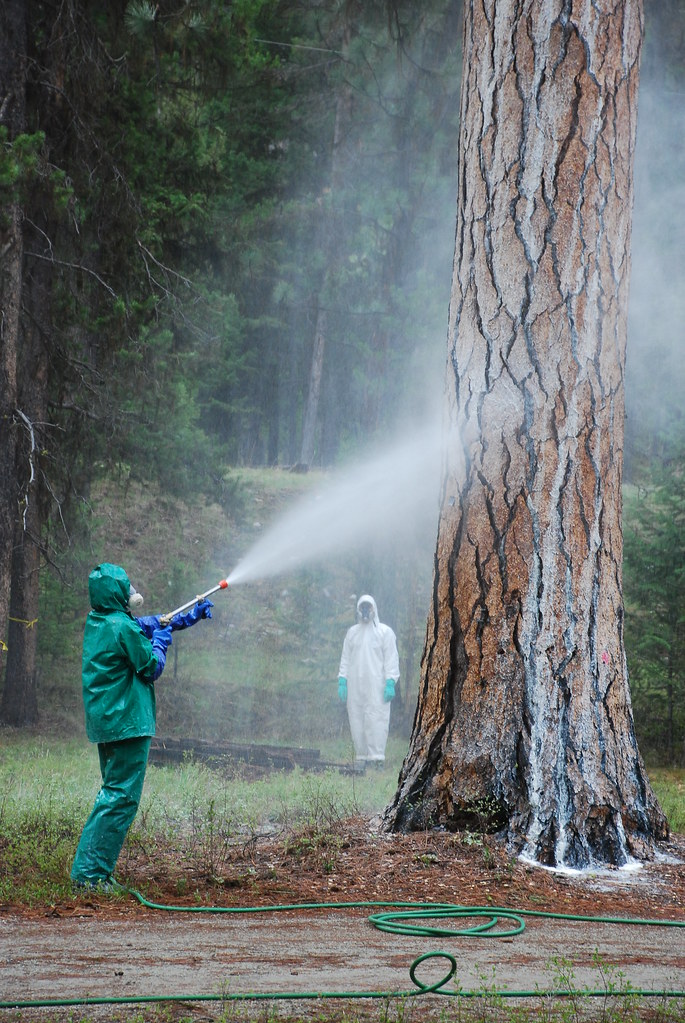
What preventive spraying looks like
A licensed applicator sprays carbaryl onto a ponderosa pine trunk. The insecticide is applied from the base up to about 30 feet, coating the bark with a protective barrier that kills beetles on contact when they try to bore in.
Photo: USDA Forest Service
Carbaryl (Sevin)
- 2 years of protection per application
- >95% prevention rate
- Can leave white film on nearby surfaces
- Most toxic to mammals of the three
~$25-40/tree/year | Professional application recommended
Permethrin (Astro, Dragnet)
- 1 year of protection per application
- >95% prevention rate
- Least toxic to mammals; no visible residue
- Toxic to aquatic life (avoid near water)
~$50-100/tree/year | Professional application recommended
Bifenthrin (Onyx)
- 1 year of protection per application
- >95% prevention rate
- No visible residue on surfaces
- Most toxic to aquatic invertebrates
~$50-100/tree/year | Professional application recommended
Important Details for All Sprays
When to spray: April through June (before July beetle flight)
Coverage: Entire trunk, base to where it narrows to 4-6 inches. Full circumference — any gap lets beetles in.
Who should apply: Licensed pesticide applicator with high-pressure spray equipment. Most trees are too tall for DIY.
Key rule: These are PREVENTIVE only. They cannot save an already-infested tree.
Forest Management
The most effective long-term strategy. Colorado's ponderosa forests have roughly double the tree density of beetle-resistant forests, thanks to a century of fire suppression. Thinning gives remaining trees more water, sunlight, and the vigor to fight back.
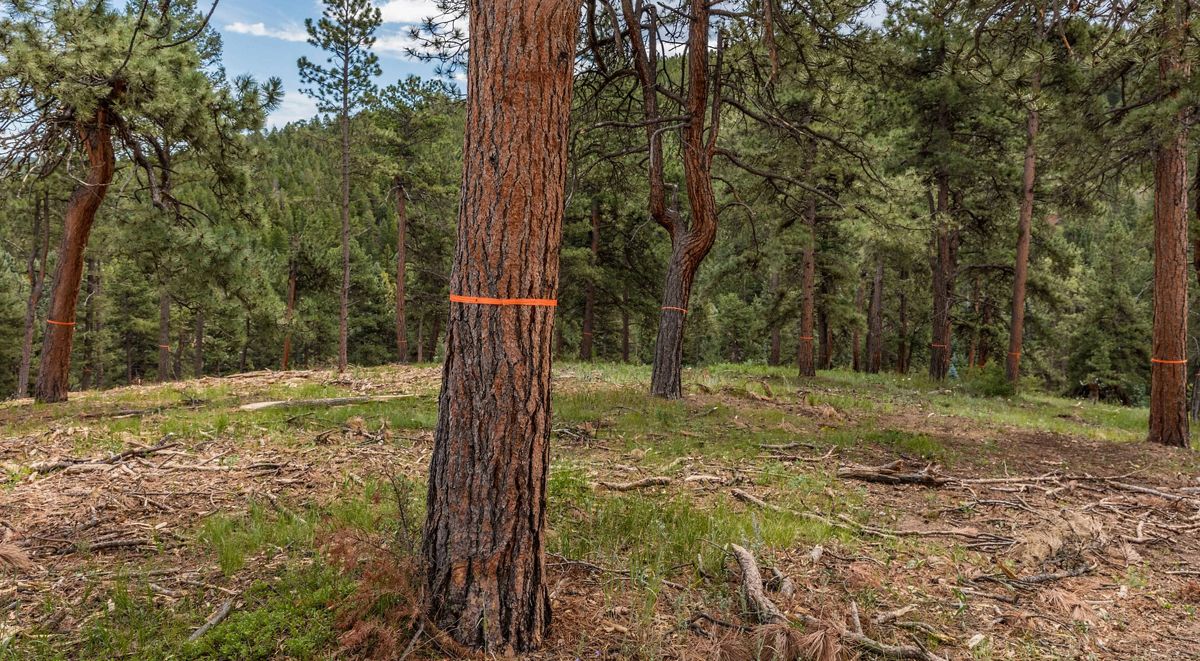
Colorado Front Range ponderosa pines after thinning. Notice the spacing between trees — each one now has access to more water and sunlight, making them far more resistant to beetle attack.
Photo: Ken Geiger / The Nature Conservancy
Tree Thinning
Reduce overcrowded stands so remaining trees get more water and nutrients. Target 15-25 feet between mature ponderosa trunks. Also reduces wildfire risk.
Timing: October through April only. Fresh cuts during beetle season (June-September) attract beetles.
Critical: All slash (cut branches/wood) must be chipped or removed immediately. Never leave fresh-cut pine near living trees.
Smart Pruning
Removes dead, diseased, or weak branches to improve overall tree health. But done wrong, pruning can actually attract beetles.
Never prune pines from June through September. Fresh-cut pine wood is a powerful beetle attractant. Ips beetles can fly as early as late February when temps hit 50°F.
Safest window: Cold winter months when temps stay below 50°F.
Supplemental Options
These can help as part of a broader strategy but have significant limitations. They should supplement, not replace, the approaches above.
Verbenone Pheromone Pouches
A synthetic "no vacancy" pheromone that tricks beetles into thinking a tree is already occupied. About 80% effective when beetle populations are low.
Limitations: Doesn't kill beetles — just diverts them to untreated trees. Loses effectiveness once infestation reaches epidemic levels. Must replace annually.
CSFS offers discounted pouches in Front Range counties
Trunk Injections (TREE-age)
Insecticide injected directly into the trunk. Lasts 2-3 years and has zero environmental drift. However, the Colorado State Forest Service calls results "inconsistent" for mountain pine beetle specifically.
Our take: Better as a supplement to bark spray, not a replacement. Best for trees near water where spraying isn't practical. Must be applied in fall (September) — summer injections have failed in research.
~$150-300/tree every 2 years
If a Tree Is Already Infested
Once beetles are established inside a tree, no treatment can save it. The priority shifts to preventing the beetles from spreading to your other trees. One infested tree produces enough beetles to attack up to 10 new trees.
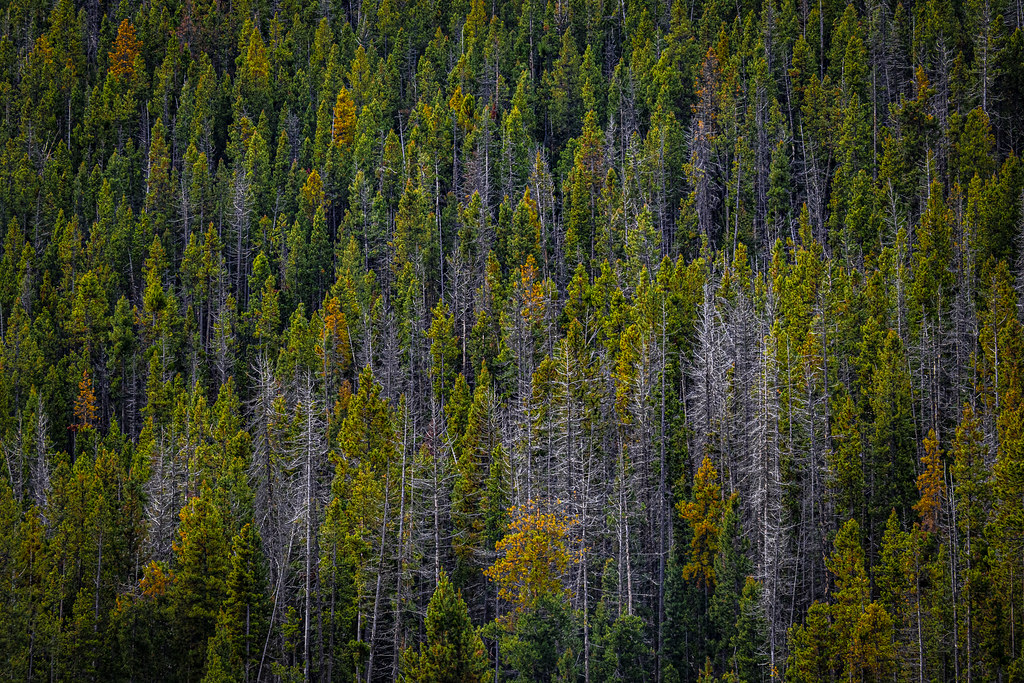
Grey standing dead trees among survivors — the aftermath of a mountain pine beetle outbreak. One infested tree can produce enough beetles to attack 10 more. Swift removal is critical.
Photo: USDA
Remove the Tree
Cut down before July to prevent the next generation from emerging and spreading.
Chip the Wood
Chipping destroys the inner bark where larvae live. 100% effective at killing beetles.
Solarize Logs
Cover cut logs with clear plastic in full sun for 4-6 weeks. Heat kills all larvae.
Burn or Debark
Burning (with permit) or removing bark from logs kills larvae. Never store infested wood near living pines.
What Doesn't Work
With bark beetles all over the news, some companies are selling products that have no scientific backing. The Colorado State Forest Service warns that most "natural" beetle products have not undergone extensive testing and may not be EPA-registered. Save your money.
Neem oil
No research supporting efficacy against bark beetles. Works for some garden pests, not beetles boring under bark.
Essential oils
Peppermint, clove, rosemary sprays have zero published research for pine bark beetles.
Diatomaceous earth
Works on exposed insects but bark beetles bore UNDER bark where DE can't reach.
Soil drench insecticides
Imidacloprid and dinotefuran soil drenches confirmed ineffective for bark beetles in research.
Garden-grade insecticides
Products with permethrin/bifenthrin for garden pests LACK bark-adhesion additives needed for beetles.
Beetle traps near your trees
Pheromone traps ATTRACT beetles to an area. Using them near your trees makes things worse.
Treating infested trees
No chemical can save a tree once beetles are established. Anyone claiming otherwise is wrong.
Painting bark wounds
Does not prevent beetle entry. Can trap moisture and cause additional problems.
Diesel fuel as a carrier
CSFS explicitly warns: never use petroleum products. Harmful to the tree and ineffective.
Red Flags When Hiring a Tree Company
⚠ Claims they can save an already-infested tree
⚠ Pushes trunk injections as the only treatment
⚠ Can't name the specific chemical they'll use
⚠ Offers a "proprietary blend" or unnamed product
⚠ Doesn't discuss timing relative to beetle flight season
⚠ Isn't a licensed pesticide applicator in Colorado
The Best Time to Act Is Now
Beetle flight season begins in July. Trees need to be watered and treated by June to be protected. Don't wait until you see red needles — by then it's too late.
Information on this page is based on research from CSU Extension, Colorado State Forest Service, and the USDA Forest Service.