
Protect Your Pine Trees from Bark Beetles
Colorado's Front Range forests are under threat — but there's still time to act. Together, we can protect our trees through early detection, prevention, and community action.
2026 Beetle Season Alert: Front Range at Critical Risk — Warm winters and drought conditions are accelerating beetle populations.
Most or nearly all mature Ponderosa pines will be killed by pine beetles in the western front range over the next several years.— Governor Jared Polis, December 2025
Signs of Pine Beetle Infestation
Early detection is the key to saving your trees. Watch for these signs of pine bark beetle activity.
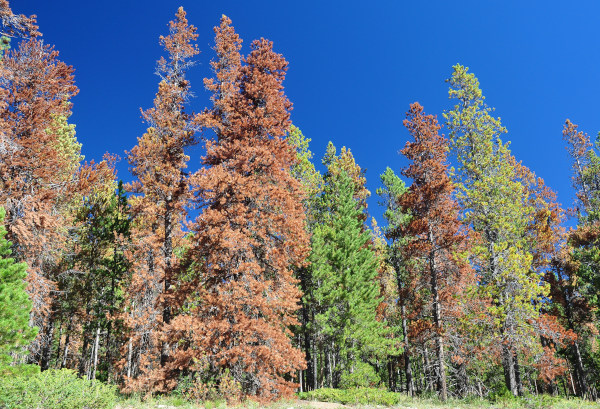
Fading or Discoloring Needles
Healthy green needles that turn yellowish, then rusty red. By the time an entire crown is red, the beetles have typically already exited the tree and moved to new hosts.
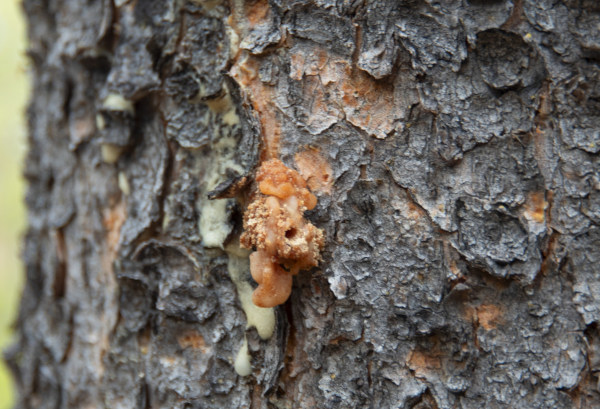
Pitch Tubes on the Trunk
Small, popcorn-shaped masses of resin on the bark surface. These form when the tree tries to "pitch out" boring beetles. Reddish-brown pitch tubes indicate a failed defense.
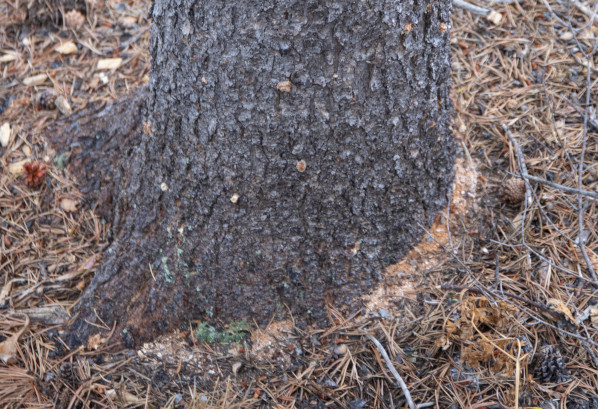
Boring Dust (Frass)
Fine, reddish-brown sawdust accumulating in bark crevices, around the base of the tree, and on spider webs nearby. This indicates active beetle tunneling beneath the bark.
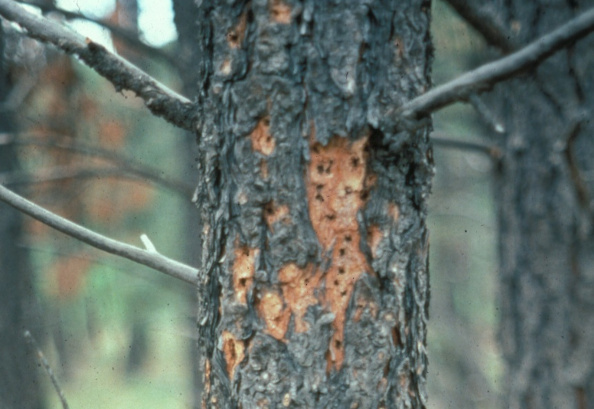
Woodpecker Activity
Heavy woodpecker feeding on trunk and branches strips bark as they search for beetle larvae. Large patches of light-colored, exposed wood are a telltale sign of severe infestation.
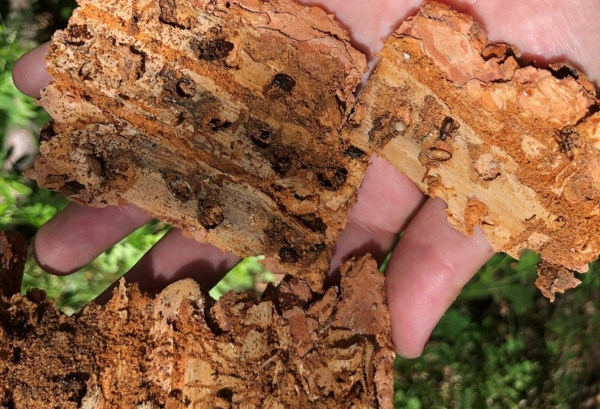
J-Shaped Galleries Under Bark
Peel back a small section of loose bark to reveal tunneling patterns. Mountain pine beetles create distinctive J- or Y-shaped egg galleries carved into the inner bark.
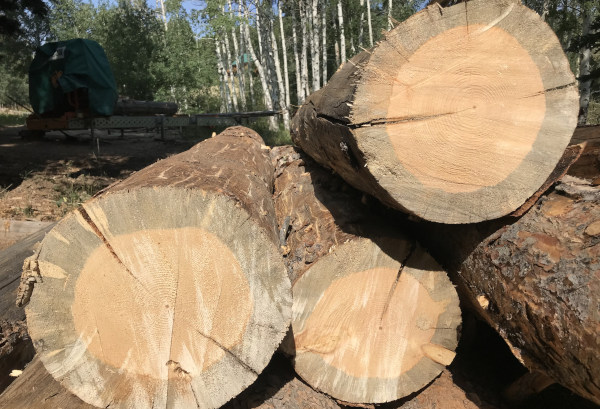
Blue Stain Fungus
Beetles carry blue stain fungus that blocks the tree's water-conducting tissues. Cross-cut sections of affected wood show distinctive blue-gray streaking through the sapwood.
Photos: Colorado State Forest Service
Latest from the Blog
Expert insights on pine beetle prevention and Colorado tree care.

Colorado's 2026 Pine Beetle Response: Task Force, Funding, and What It Means for Homeowners
Governor Polis created a statewide task force, Jefferson County launched a $500K cost-share program, and the legislature is funding biological controls. Here's what Colorado is actually doing about the pine beetle outbreak — and what homeowners need to know.

Colorado's Ponderosa Mountain Pine Beetle Task Force: What It Is, Who's Behind It, and What It Means for the Front Range
Colorado's Ponderosa Mountain Pine Beetle Task Force was created to fight the expanding Front Range outbreak. Here's what the task force is doing and what it means for you.
What You Can Do Now
Proactive steps to protect your trees this season.
Deep Water Your Trees
Stressed, drought-weakened trees are the most vulnerable. Water deeply once a month during dry periods, even in winter.
Inspect Regularly
Check your pines monthly from May through October. Look for pitch tubes, boring dust, and fading needles.
Call a Professional
A certified arborist can apply preventive spray treatments in spring. Don't wait until you see damage — prevention is far cheaper than removal.
Find Pine Beetle Info for Your Area
Local prevention guides for Front Range communities.